
- Trails are open 24/7 at no charge. Enjoy a Winnie-the-Pooh themed TRAIL TALES Storybook Walk.
What’s Happening: Snow!
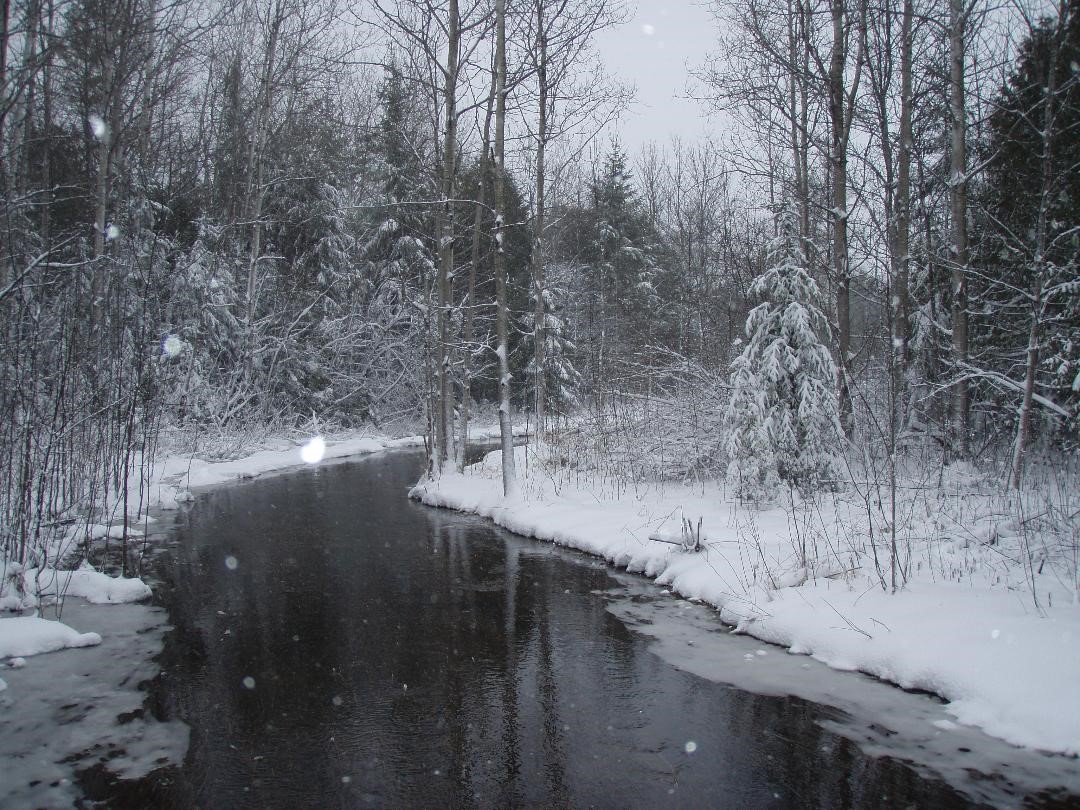
Finally! Crossroads at Big Creek has morphed into an enchanting snow-covered winter landscape, and while we continue with our education and restoration efforts, our attention now turns to sliding. Sliding is defined as “moving smoothly along a surface.” And while we fervently hope nobody slides off a snowy road or slips on the ice, when conditions are adequate, we will be grooming selected trails so our visitors can move smoothly on our trails using skis, sleds and kick sleds.
Months ago, the topic “Sliding” was chosen for this week’s Saturday Science family program. Geared for elementary students but open to learners of all ages, the program is an introduction to the basic physics which enable winter sports. Participants also will learn a bit about the otters that live in The Cove Estuary and through videos, demonstrations and (conditions permitting) through outdoor experiences, learn about how gravity, force and friction influences smooth movement.
But wait. There’s more!
Scientists are beginning to understand that “sliding” involves more than just force and friction. Obviously, it is difficult to slide on a bumpy or soft, fluffy surface. A groomed trail is solid, and a ski is solid, and though both are essentially smooth, one would expect there to be friction. But skis slide.
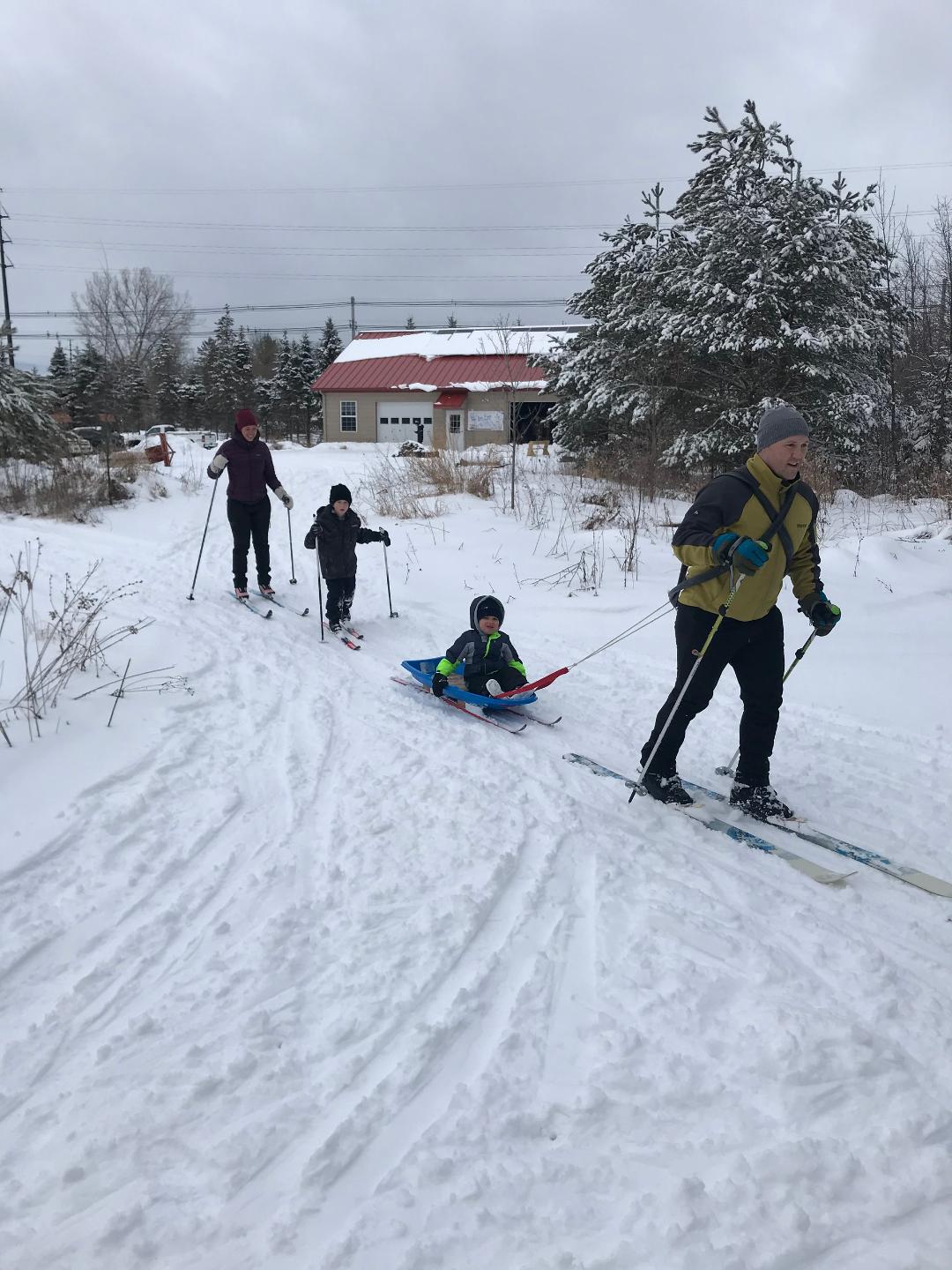
So, what really makes snow and ice slippery? The answer: Water. Apparently, there almost always is a very thin film of water – sometimes called a “quasi-liquid layer” – on the surface of snow and ice. Water can be a solid or a liquid or a gas, but no matter what form, the substance is the same. Water is made up molecules, each of which consists of one oxygen atom and two hydrogen atoms. H2O
The different states of matter are due to the amount of energy each molecule has. In the liquid state, water molecules vibrate more than they do in solid ice.
On snow—fluffy or groomed– an extremely thin layer of water exists because the water molecules at the surface, for a variety of reasons, vibrate and move more than those deeper in the snow pack or in solid ice. The water molecules at the surface tend to be liquid even when the temperature is below the official melting point. And water (even a microscopic film) is slick.
This phenomenon explains how we offer can environmentally friendly winter sports. It also enables our river otters to “toboggan” over the snow and to create slides into The Cove Estuary.
So exactly what is an estuary? That will be explained in a lecture offered on Monday, February 24 at 1:30. The talk will cover geological and human history of The Cove and discuss the wildlife that use an estuary for breeding and migration.
”Native Shrubs for a Door County Landscape” will be the lecture on Tuesday, February 25 at 6:30. Jason Feldman of Jason Feldman Landscapes will recommend shrubs that help pollinators and birds and also thrive in the various soil types in Door County This free presentation is Co-Sponsored by Door County Master Gardeners (DCMGA) and Wild Ones – Door Peninsula.
The trails at Crossroads at open 24/7, and when conditions are adequate, we also offer Ski-for-Free, during which we lend skis, boots, poles, snowshoes, and kick sleds to Door County residents and visitors free of change. Watch the ticker at the top of our website for trail conditions and Ski-for-Free hours of operation during which, free of charge, we will lend skis, poles, boots, snowshoes and kick sleds to Door County residents and visitors.
– by Coggin Heeringa, Interpretive Naturalist
For more information, please check out our Crossroads calendar or stop by the Collins Learning Center and pick up a printed calendar. Our trails are open all day every day, free of charge, thanks to donors like you!
Crossroads at Big Creek Learning Center and Nature Preserve is located at 2041 Michigan Street, Sturgeon Bay. Crossroads is a 501(c)3 organization committed to offering education, conducting research and land restoration, and providing outdoor experiences to inspire environmental stewardship in learners of all ages and from all backgrounds. We welcome your support.
Upcoming Activities
Wednesday, February 19
1:30 – 2:30 pm Wandering Wednesday – Naturalist-Led Hike
Join a naturalist-led hike. Easy walking. About an hour. Meet at the Collins Learning Center. Registration not required. Open to the public and free thanks to our donors.
Saturday, February 22
2-4 pm Science Saturday – Ice Harvest Demos
This program geared for elementary students but open to all ages, will explore the science of sliding which involves gravity, friction, and other forces that affect how fast and how far a sled, skis or a kicksled can move across the snow. Outdoor demonstrations, weather permitting. Meet at the Collins Learning Center. Registration not required. Open to the public and free thanks to the generosity of donors like you!
Saturday, February 22
5-7 pm Mushroom Meet Up
Free event presented by the Door Peninsula Mushroom Club. Join fellow mushroom enthusiasts to share knowledge and curiosity of fungi found in Wisconsin. What do you hope to learn this year – cooking, cultivation, identification, or something else? This kick-off gathering can help direct the club to support local interest and exploration. Held at the Collins Learning Center. Contact the Door Peninsula Mushroom Club for additional info.
Monday, February 24
3:30 p.m. Environmental Exploration – Big Creek in Winter
Geared for elementary aged students, but open to learners of all ages, this will be a hike along Big Creek, to see how weather conditions affect the water, and also observe signs of the creatures that visit the creek in winter. Dress for the weather. Meet in the lab at the Collins Learning Center. Registration not required. Open to the public and free thanks to the generosity of donors like you.
Tuesday, February 25
3:30 p.m. Environmental Exploration – In Search of Green
Geared for elementary students but open to learners of all ages, this is a hike to search for places where photosynthesis is still taking place. Dress for the weather. Meet in the lab at the Collins Learning Center. Registration not required. Open to the public and free thanks to the generosity of donors like you.
6:30-8 p.m. DCMGA/ Wild Ones Lecture: “Native Shrubs for a Door County Landscape”
Jason Feldman of Jason Feldman Landscapes will recommend shrubs that help pollinators and birds and also thrive in the various soil types in Door County. Free and open to the public. Meet at the Collins Learning Center. Sponsored by Door County Master Gardeners (DCMGA) and Wild Ones – Door Peninsula.
