
- Trails are open 24/7 at no charge. Enjoy a Winnie-the-Pooh themed TRAIL TALES Storybook Walk.
What’s Happening: Insect Celebration
This week at Crossroads at Big Creek, we focus on and celebrate insects, which may seem strange to some folks who apparently spend much of their time and money trying to get rid of them.
And I get that, sort of. Agricultural pests can be devastating. I’m currently waging a battle with Japanese beetles on my raspberries, and I certainly try to avoid stepping on yellow jackets. But scientists tell us that of the million known species of insects, only about 10,000–30,000 are considered harmful. Put another way, a mere 1% of insects bite, sting, or spread diseases to humans. If you add forest and agricultural pests, maybe 3% of all insects are harmful.
That means the vast majority of insects are beneficial—as pollinators, decomposers, or vital links in the food chain… essential to life on Earth as we know it. And the rest are neutral, not helpful or harmful to humans or plants.
Gall-forming insects, which we’ll study during our Saturday Science family program on September 13 seem to fall into that neutral category—but they are particularly peculiar and fascinating. Take a walk this time of year and you can’t help but notice that some leaves are covered with lumps, bumps, or spiky clusters.
For example, willows may have growths that look like pinecones; aspen trees can show abnormal swollen lumps that resemble “already-been-chewed bubblegum”; and especially obvious in late summer are the round balls that form on Canada goldenrod stems. Plus literally hundreds more. Galls!
Galls develop when an insect lays an egg on the leaf, stem, or bud of a plant. When the egg hatches, the tiny larva secretes a chemical—technically not a hormone, but a hormone-like substance—that triggers the plant to produce extra cells, enlarge those cells, and direct extra sugars to the sturdy structure that forms around the larva.
A gall is the perfect nursery. It hides and protects the larva from predators, shelters it from the weather [think climate-controlled comfort], and provides an unlimited supply of nutritious food until the larva pupates and eventually emerges as an adult insect.
During Saturday Science, participants will learn about various local galls—maybe even dissect a few—and then venture into the preserve to find examples.
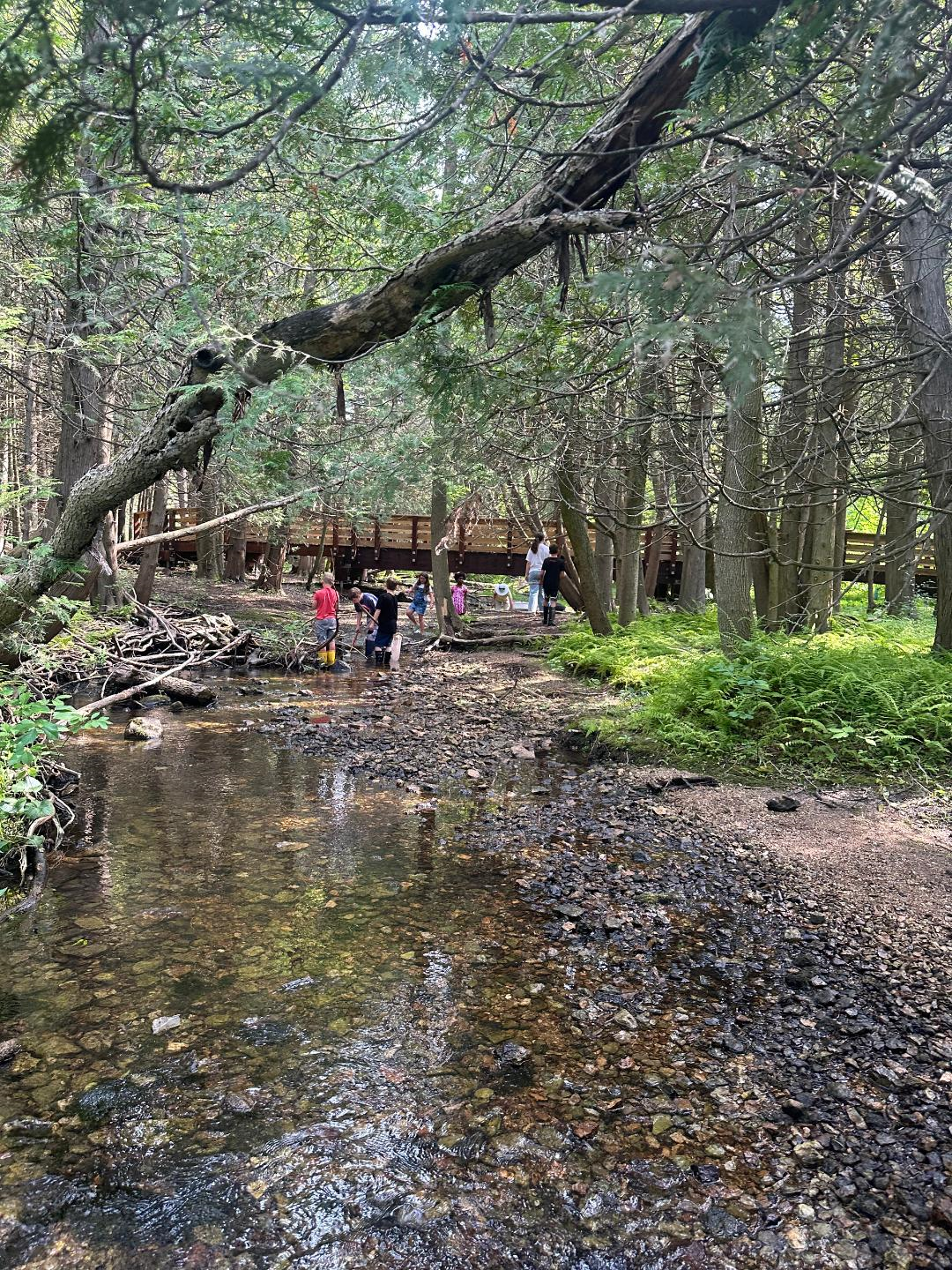
At our Tuesday afterschool program, Environmental Exploration, families will explore Big Creek in fall—meaning the water is quite low—giving young explorers a chance to search for the aquatic insects that take refuge in the moist mud under the rocks.
Wednesday marks the kickoff of the Fall Session of Junior Nature Club. Preschool children and their adult companions will walk to the North Bridge. Because these young learners are fascinated by ants, grasshoppers, and just about anything that flies, our first gathering will no doubt turn into an insect adventure.
Thanks to the generosity of our donors, Crossroads is able to provide free educational opportunities to learners of all ages. Our trails also are open all day, every day, free of charge.
– by Coggin Heeringa, Interpretive Naturalist
For more information, please check out our Crossroads calendar or stop by the Collins Learning Center and pick up a printed calendar. Our trails are open all day every day, free of charge, thanks to donors like you!
Crossroads at Big Creek Learning Center and Nature Preserve is located at 2041 Michigan Street, Sturgeon Bay. Crossroads is a 501(c)(3) organization committed to inspiring stewardship of the environment through education, research, and outdoor experiences. We welcome your support.
Upcoming Activities
