
- Trails are open 24/7 at no charge. Enjoy a Winnie-the-Pooh themed TRAIL TALES Storybook Walk.
What’s Happening: The Worth of Water
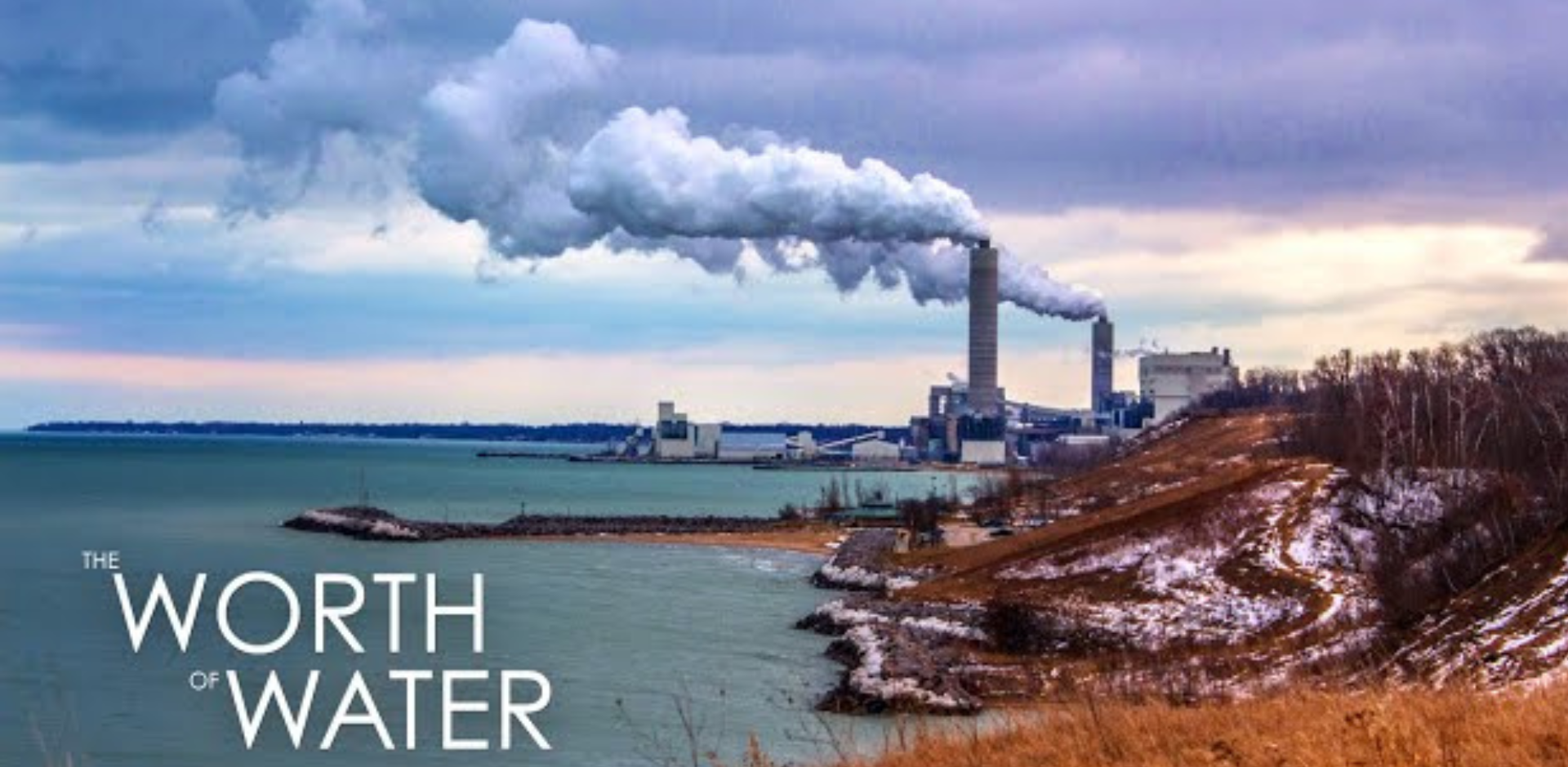
The documentary “The Worth of Water: A Great Lakes Story” will be screened at Crossroads at Big Creek on Monday, November 24, at 1:30. This will be the third Great Lakes–related documentary we have offered this year. Earlier, as part of our popular Fish Tales Lecture Series, we hosted “All Too Clear,” and last week offered two showings of the award-winning documentary “Fish Thief.”
For this screening, we will not host guest videographers, producers, or panels of experts, and we will not require reservations. But this documentary is well worth viewing, and it does indeed achieve the Fish Tales mission of “presenting the science of Great Lakes fisheries” … plus several additional environmental concerns.
Presenting science is exactly what the film does. Milwaukee environmentalists Julia Robson and Alyssa Armbruster inspired—as we were—by Dan Egan’s award-winning book The Death and Life of the Great Lakes, documented their 343-mile walk from the shores of Milwaukee to the upper reaches of Lake Superior in Michigan’s Upper Peninsula. Their adventure is interspersed with interviews with scientists, university professors, biologists, and Indigenous leaders. Topics covered include biodiversity loss, climate, drinking water, economics, and of course, invasive species.
We all appreciate the worth of water and want our lakes to be clean… but not necessarily clear.
In fact, we cringe every time we read social media posts or promotional material for the tourist industry extolling the Door Peninsula as having incredibly clear water. It hasn’t always been that way. In 1634, French explorer Jean Nicolet named La Baye Verte (“The Green Bay”) because the water was green and murky due to tiny green aquatic creatures, and in those days the waters were teeming with fish.
We’ve heard it said, “When the water turns clear, it’s not because the lake is healthy—it’s because something has taken the life out of it.”
According to a piece on Interlochen Public Radio, “The arrival of quagga mussels was the single largest ecological event in the history of the lake,” according to Dave Strayer, a freshwater ecologist at the Cary Institute of Ecosystem Studies. “It was bigger than deforesting the watershed, it was bigger than building Chicago.” Quagga mussels haven’t only changed how the lake looks — they’ve completely upended the food web in the lakes. Mussels control the flow of nutrients and productivity in all of the Great Lakes.
“The Worth of Water” touches on these ecological changes and also highlights various forms of pollution, opening with the satirical 1960s song “Pollution” by Tom Lehrer. And it’s not exactly a coincidence that our Environmental Exploration after-school program on Tuesday will focus on water pollution.
Meanwhile, we expect an influx of hikers, runners, dog walkers, parents, and kids who make Crossroads at Big Creek their exercise destination during gun-deer hunting season. Visitors of all ages will enjoy lovely late-autumn habitats and will probably see some of our arriving winter birds but will not see much—if any—water in Big Creek.
This will be a week of science and learning, and a week (like the other 51) that we appreciate the worth of water.
– by Coggin Heeringa, Interpretive Naturalist
For more information, please check out our Crossroads calendar or stop by the Collins Learning Center and pick up a printed calendar. Our trails are open all day every day, free of charge, thanks to donors like you!
Crossroads at Big Creek Learning Center and Nature Preserve is located at 2041 Michigan Street, Sturgeon Bay. Crossroads is a 501(c)(3) organization committed to inspiring stewardship of the environment through education, research, and outdoor experiences. We welcome your support.
Upcoming Activities
