
- Trails are open 24/7 at no charge. Enjoy a Winnie-the-Pooh themed TRAIL TALES Storybook Walk.
What’s Happening: Bugs and Beer
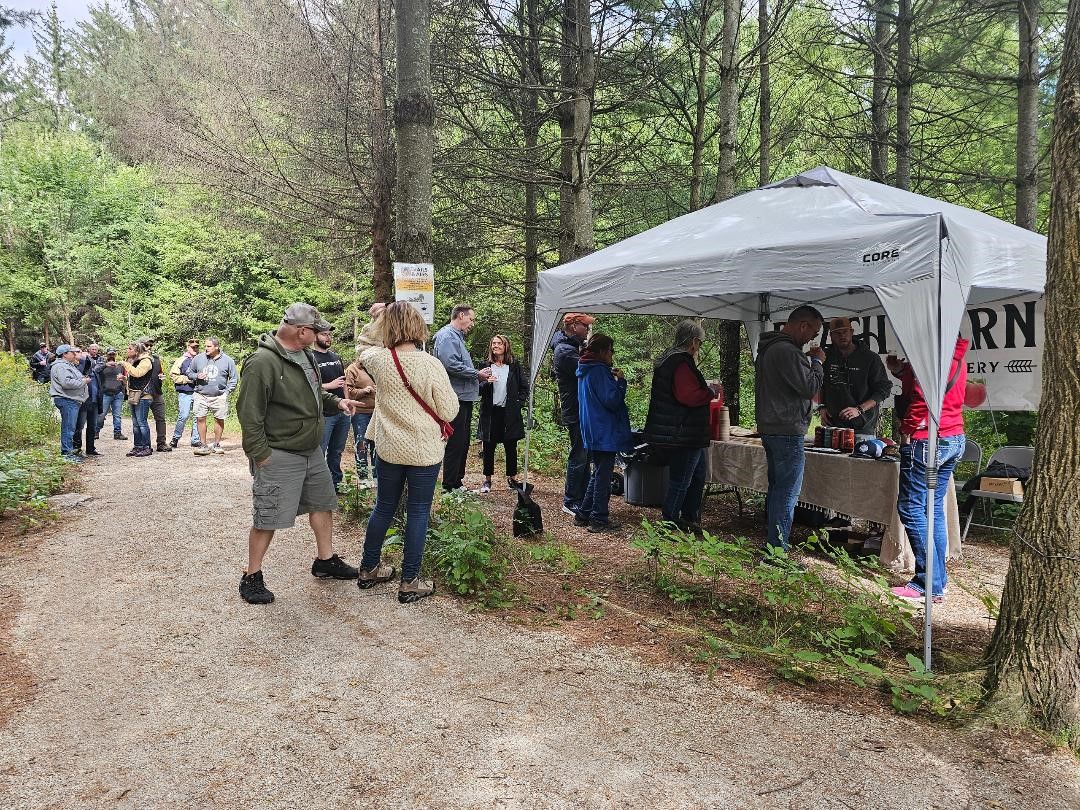
It started as sort of a joke: “Which came first—the trails or the ales?” That question was inspired by our upcoming fundraiser Trails and Ales, scheduled for Saturday, September 6, from 12–3:30 p.m. During this unique event, local brewers will set up tasting booths along our trails, so visitors can enjoy both a nature hike and a sampling experience.
But the question lingers: which really did come first? That’s exactly the kind of timeline-and-connections puzzle we love to explore at Crossroads.
Long before Door County was even a peninsula, this land was buried beneath a massive glacier. Meanwhile, across the globe, people in China were already fermenting cereal gruels, honey, and fruit—the earliest known alcoholic beverages.
About 10,000 years ago, near the end of the Ice Age, parts of our Ida Bay Preserve were just emerging from beneath glacial meltwater. At that same time in Mesopotamia, fermentation was becoming widespread—not so much as a substitute for water, but for rituals, feasts, and sustenance.
By 5,000 years ago, as Lake Michigan’s water levels stabilized (with the land rising and waters receding), fermented drinks had become staples of daily life in many cultures.
Much of today’s Big Creek Preserve remained underwater until about 3,800 years ago. By then, ales were common in Mesopotamia and consumed by both children and adults.
Around the time our Cove Estuary Preserve was finally exposed as dry land, Egyptian pyramid builders were already receiving beer as part of their daily wages.
And by the time Indigenous peoples established seasonal camps along Big Creek and the Cove Estuary, Europeans were already brewing “small beer”—a low-alcohol drink consumed daily because it was safer than contaminated water.
When European explorers eventually reached this peninsula, beer and ale were firmly entrenched in European culture.
So, in answer to our opening question—ales came first! And if you’d like to learn more about the shorelines of ancient postglacial lakes, join us for Treks with Terrie: Reading the Landscape at Ida Bay on Thursday, September 4.
Speaking of Ice Age legacies, another highlight of the week is the annual Wild Ones Monarch Tagging Day, which got us thinking about butterflies and glaciers, too.
Scientists speculate that monarch migration may also trace its origins to the Ice Age. When glaciers covered much of North America, monarchs and other insects were forced south into tropical refuges. As the ice retreated, monarchs spread northward wherever milkweed was abundant—but they always returned to Mexico for the winter.
There’s a catch, though: milkweed doesn’t thrive in dense forests. It grows in open, sunny areas. Some researchers believe monarchs may not have summered in Door County before European settlement. During the 19th-century Lumber Era, widespread logging followed by agriculture opened up the landscape, allowing milkweed to spread across the Great Lakes region. And the monarchs followed.
Today, monarchs breed in our meadows each summer before migrating thousands of miles to Mexico. Which came first here, the monarchs or the milkweed? Milkweed came first. And that’s why we invite the community to help us tag monarchs at Crossroads, contributing to ongoing research into this remarkable migration.
So, whether you’re raising a glass at Trails and Ales, tagging butterflies, or joining a geology trek, we invite you to experience how Crossroads’ trails lead not just through beautiful landscapes, but also through deep history. Every step you take connects you to stories stretching back into history.
– by Coggin Heeringa, Interpretive Naturalist
For more information, please check out our Crossroads calendar or stop by the Collins Learning Center and pick up a printed calendar. Our trails are open all day every day, free of charge, thanks to donors like you!
Crossroads at Big Creek Learning Center and Nature Preserve is located at 2041 Michigan Street, Sturgeon Bay. Crossroads is a 501(c)(3) organization committed to inspiring stewardship of the environment through education, research, and outdoor experiences. We welcome your support.
Upcoming Activities
